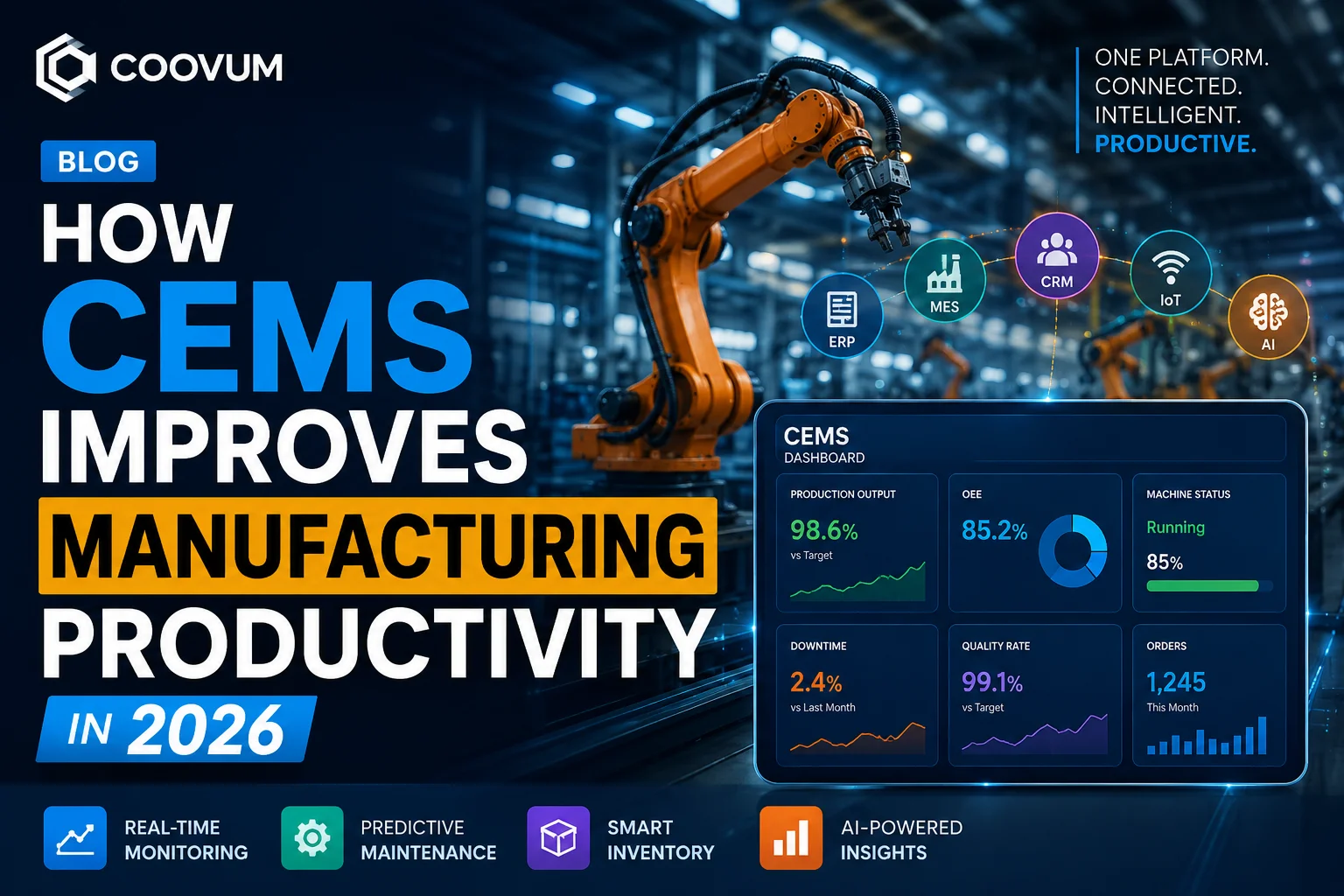
In today’s highly competitive manufacturing landscape, productivity is no longer just about producing more—it’s about producing smarter. Manufacturers are under constant pressure to reduce costs, improve quality, minimize downtime, and deliver products faster. This is where a Connected Enterprise Management System (CEMS) becomes a game-changing solution.
By integrating business operations, factory processes, AI, IoT, and real-time analytics into a single platform, CEMS enables manufacturers to make faster, data-driven decisions while maximizing operational efficiency.
In this article, we’ll explore how CEMS is transforming manufacturing productivity in 2026.
What is CEMS?
A Connected Enterprise Management System (CEMS) is an integrated digital platform that connects every critical business and manufacturing function into one intelligent ecosystem.
Unlike traditional standalone software, CEMS unifies:
- Enterprise Resource Planning (ERP)
- Customer Relationship Management (CRM)
- Manufacturing Execution System (MES)
- Inventory Management
- Production Planning
- Procurement
- Finance
- Quality Management
- Asset Management
- IoT Devices
- AI Analytics
- Business Intelligence Dashboards
Instead of managing multiple disconnected systems, businesses gain complete visibility across their operations from a single platform.
1. Real-Time Production Monitoring
Traditional factories often rely on manual reporting, which delays decision-making.
CEMS provides:
- Live production dashboards
- Machine utilization tracking
- Production target monitoring
- Shift performance analysis
- Real-time alerts
Managers can instantly identify bottlenecks and respond before small issues become major production losses.
Benefits
- Faster decision-making
- Higher production efficiency
- Improved machine utilization
- Better workforce management
2. AI-Powered Predictive Maintenance
Unexpected equipment breakdowns are one of the biggest productivity killers.
CEMS continuously collects machine data through IoT sensors and AI algorithms to predict failures before they occur.
Instead of fixing machines after they break, manufacturers can perform maintenance at the right time.
Benefits include:
- Reduced downtime
- Lower maintenance costs
- Longer equipment lifespan
- Increased production reliability
3. Smart Inventory Management
Inventory problems often lead to production delays and increased costs.
CEMS provides real-time inventory visibility by tracking:
- Raw materials
- Work-in-progress (WIP)
- Finished goods
- Warehouse stock
- Supplier deliveries
The system automatically alerts teams when stock levels fall below predefined thresholds.
This helps eliminate:
- Stock shortages
- Overstocking
- Production interruptions
4. Automated Production Planning
Production scheduling becomes more accurate with CEMS.
The system analyzes:
- Customer orders
- Material availability
- Machine capacity
- Workforce availability
- Delivery deadlines
It automatically generates optimized production schedules, reducing idle time and improving resource utilization.
5. Improved Quality Control
Quality issues increase costs through rework, waste, and customer complaints.
CEMS helps manufacturers maintain consistent quality by:
- Monitoring quality checkpoints
- Tracking inspection results
- Recording defects
- Identifying root causes
- Generating quality reports
AI can even detect production patterns that lead to defects before they become widespread.
6. Complete Factory Visibility
Manufacturing leaders no longer need multiple reports from different departments.
CEMS combines data from:
- Production
- Sales
- Inventory
- Finance
- Procurement
- Maintenance
- Quality
into a single executive dashboard.
This enables management to monitor the entire business from one screen.
7. Better Decision-Making with Business Intelligence
CEMS includes powerful analytics dashboards that transform raw factory data into actionable insights.
Decision-makers can monitor key metrics such as:
- Overall Equipment Effectiveness (OEE)
- Production efficiency
- Machine downtime
- Material consumption
- Inventory turnover
- Order fulfillment
- Revenue trends
Interactive dashboards help managers identify opportunities for improvement and make informed strategic decisions.
8. Seamless Integration Across Departments
Disconnected departments often create communication gaps.
CEMS connects:
- Sales
- Procurement
- Production
- Warehouse
- Finance
- HR
- Customer Support
Everyone works from the same real-time data, reducing errors, delays, and duplicate work.
9. AI-Driven Demand Forecasting
Using historical sales data, seasonal trends, and customer demand, CEMS predicts future production requirements.
Benefits include:
- Better production planning
- Lower inventory costs
- Reduced waste
- Improved customer satisfaction
10. Enhanced Customer Satisfaction
Customers expect faster delivery and consistent product quality.
CEMS improves customer experience through:
- Accurate production scheduling
- Faster order processing
- Real-time order tracking
- Better inventory availability
- Higher product quality
Satisfied customers are more likely to become repeat buyers and recommend your business.